Investment Insights from Hot Chips 2026 on the 2027 AI Chip Technology Roadmap
By mid‑2026, the AI hardware world has learned to treat Hot Chips not just as a technical conference, but as an unofficial preview of the next year’s capital flows. Architectures unveiled, packaging roadmaps hinted at, and memory strategies debated on stage all feed into how investors think about the 2027 AI chip landscape. When engineers share their plans, markets quietly rearrange expectations.

This blog examines those signals from an investor’s perspective: what the 2026 session themes imply for 2027 products, which technology vectors appear strongest, where risk is rising, and how all of this can be turned into a structured view on AI chip investments rather than a scatter of conference anecdotes.
Reading Hot Chips as a forward indicator, not a product catalog
Hot Chips talks rarely present shipping products in full commercial detail; instead, they focus on architectures either just entering production or slated for the following year. For investors, the key is to treat the conference as a forward indicator of trajectories, not as a catalog of what is already priced into stocks.
The 2026 agenda reinforces several trends: AI accelerators remain central, but more attention shifts to memory subsystems, packaging, and system‑level fabrics. Presenters talk less about single‑chip peak performance in isolation and more about cluster‑level metrics—training throughput, bandwidth per node, and power per rack. This indicates that 2027 roadmaps will likely frame value creation at the system level rather than at purely the device level.
Investors can translate this into a simple principle: firms whose narratives at Hot Chips emphasize integrated system design, packaging, and memory are more aligned with where the market is headed than those still focusing narrowly on raw FLOPs. The former are better candidates for durable positioning in 2027, even if their next chips are not the absolute fastest on any single benchmark.
Architectural themes: specialization, sparsity, and dataflow refinement

At the architectural level, Hot Chips 2026 sessions reveal a maturing view of AI computation. Rather than simply scaling dense matrix engines, designers emphasize specialization and sparsity. Presentations on new accelerators highlight blocks tuned for specific workloads—recommendation models, sequence processing, or vision pipelines—alongside more general tensor cores.
Sparsity support appears repeatedly: hardware paths that skip zeros, compressed representation engines, and dataflow schemes that reduce unnecessary multiply‑accumulate operations. This suggests that 2027 chips will increasingly seek performance gains not just from throwing more silicon at dense operations, but from exploiting the structure of modern models.
For investors, the insight is clear. Companies that talk convincingly about workload‑aware architectures and sparsity exploitation are positioning themselves for a world where customers demand efficiency improvements at the model level, not just brute force power. This aligns with cost‑sensitive cloud operators and enterprises that, by 2027, will be under pressure to scale AI usage while controlling power and capital expenditures.
Packaging and memory: where 2027 bottlenecks and upside converge
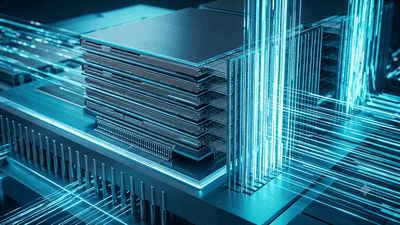
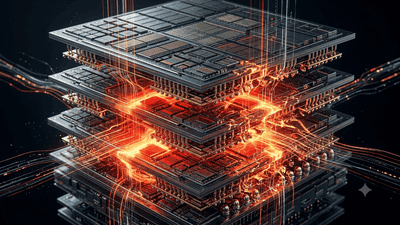
If one thread dominates Hot Chips 2026 AI sessions, it is the acknowledgment that memory and packaging have become equal partners to logic in defining performance. Several talks focus on multi‑die packages with high‑bandwidth memory, co‑packaged optics, or advanced interposers, and they treat these elements as the primary enablers for next‑generation accelerators.
Roadmaps presented point toward 2027 designs with more HBM stacks per package, higher effective bandwidth, and tighter coupling between compute tiles and memory tiles via die‑to‑die interconnect. There is also visible interest in new packaging flows that can support higher power densities without sacrificing yield—an issue that becomes central as TDPs rise.
From an investment standpoint, this implies that pure logic differentiation will be less defensible without corresponding advances in memory and packaging. Firms with credible partnerships and capacity plans in advanced packaging and HBM—whether through foundry relationships or in‑house expertise—will likely enjoy better margin protection and ramp reliability in 2027, while those without such arrangements may face bottlenecks even if their core architecture is strong.
Die‑to‑die interconnect and chiplet fabrics: modularity as a business lever

Hot Chips 2026 also underscores the growing maturity of chiplet‑based designs and die‑to‑die interconnect fabrics. Presentations discuss not just the technical merits of chiplet decomposition—yield, flexibility, heterogeneous integration—but also practical fabrics capable of connecting tiles in low‑latency, high‑bandwidth meshes within a package.
Architects show how these fabrics enable product families: base compute tiles reused across SKUs, memory tiles swapped or expanded for higher tiers, and I/O or networking tiles configured according to market segments. By 2027, these chiplet strategies are poised to become central tools for diversifying product lines without redesigning entire monolithic chips each cycle.
For investors, this modularity has two implications. First, firms with robust chiplet strategies can respond more flexibly to demand shifts—offering various configurations for training, inference, and edge usage—and thus potentially smooth revenue volatility. Second, chiplet fabrics require ecosystem support and standardization; companies that present clear, interoperable tile stories at Hot Chips may be better placed to attract partners and third‑party innovation, expanding their addressable markets in 2027.
Power and thermal narratives: 2027 as the year of efficiency credibility
Another notable shift in 2026 talks is the depth of discussion around power and thermal constraints. Rather than treating power as a secondary metric, many presenters frame their designs explicitly against data‑center power envelopes, rack densities, and cooling strategies. Chips are described in terms of performance per watt and per rack, not just per device.
Architectures touted for 2027 emphasize dynamic power management, multi‑mode operation, and co‑design with cooling—air, liquid, or hybrid. Designers show scenarios where chips operate at different performance‑power operating points depending on cluster configuration and workload type.
Investors should see this as a signal that, by 2027, buyers will reward efficiency credibility as much as peak speed. Companies whose Hot Chips messaging strongly integrates system‑level power and thermal planning into their chip narratives are more likely to win large‑scale deployments where AI clusters push facility limits. Those that remain silent or hand‑wave around power may face growing skepticism from operationally focused customers.
In‑house cloud silicon: reading between the lines for competitive pressure

Hot Chips 2026 continues a pattern where major cloud providers reveal partial details about their in‑house AI accelerators and supporting infrastructure. While disclosure is selective, the talks reveal that in‑house chips are moving steadily up the performance and integration curve, with 2027 generations aimed at even deeper embedding into specific cloud services.
These presentations usually stress tight integration with the provider’s networking, storage, and orchestration stack, along with software frameworks tailored to their proprietary silicon. Even if full benchmarks are not shared, the architectural ambition is obvious: in‑house chips are designed to handle a substantial share of training and inference workloads within their respective clouds.
For investors, the implication is twofold. First, merchant AI chip vendors will face continued, and in some segments intensifying, competition from these in‑house designs by 2027, particularly in mid‑tier and inference workloads. Second, companies that position themselves at Hot Chips as complementary to cloud silicon—offering differentiation in certain workloads, multi‑cloud portability, or superior edge integration—may maintain stronger demand curves than those that simply chase the same sweet spots as hyperscaler chips.
EDA, verification, and design productivity: invisible but investable
While Hot Chips is not primarily an EDA conference, 2026 talks frequently reference design complexity, verification challenges, and the need for improved tooling to handle multi‑die, high‑bandwidth, and power‑constrained designs. Some presentations explicitly credit new flows or tools that enabled aggressive architectures to reach tapeout schedules.
This hints that by 2027, design productivity and verification scalability will be differentiators. As AI chips incorporate more tiles, memory interfaces, and specialized blocks, firms that have invested in robust internal or partner EDA capabilities will be able to bring products to market more quickly and with fewer late‑stage surprises.
Investors can interpret tool‑related commentary as a proxy for execution risk. Companies that openly discuss structured verification strategies, formal checks, and scalable sign‑off flows at Hot Chips are signaling awareness of the complexity barrier and investment in overcoming it. Those that gloss over these aspects may be more exposed to schedule slips or yield issues, which can materially affect 2027 revenue trajectories.
Risk markers: where 2027 roadmaps look stretched
Not all signals from Hot Chips 2026 are purely positive. Some talks reveal roadmaps that appear extremely ambitious on multiple fronts: aggressive node targets, complex packaging, and large architectural leaps all planned on tight timelines. For investors, these sessions are useful as risk markers.
If a company’s 2027 roadmap relies simultaneously on cutting‑edge process, brand‑new packaging, and radically new architecture, the probability of delay or margin compression rises. The more dependencies stacked, the more fragile the plan. In contrast, incremental architectural improvements combined with well‑understood packaging and node choices may offer lower upside in headline performance but higher reliability in commercial execution.
Listening for these stacked ambitions at Hot Chips helps investors distinguish between roadmap narratives that are inspiring but precarious and those that are measured but robust. Capital allocation can then favor firms whose 2027 trajectories balance innovation with realistic execution capacity.
Turning Hot Chips signals into an investment framework for 2027
To translate conference insights into a practical investment framework, it helps to organize observations into a few core questions:
First, which companies present architectures that clearly align with emerging workload trends—sparsity, specialization, and system‑level metrics—rather than solely with legacy benchmarks? These firms are better placed to capture real 2027 demand.
Second, which firms demonstrate credible strategies for memory, packaging, and chiplet integration, backed by partnerships or internal capabilities, rather than treating these areas as afterthoughts? These companies are more likely to avoid supply or performance bottlenecks as AI clusters scale.
Third, which players acknowledge and address power, thermal, and verification complexity openly, indicating investment in sustainable design and execution? They are better candidates for dependable ramp‑ups rather than one‑off hits.
Fourth, how do merchant vendors position themselves relative to in‑house cloud silicon, and do they articulate niches or differentiators that will remain defensible in 2027? Clear strategic positioning here reduces the risk of sudden demand erosion.
Conclusion: using Hot Chips 2026 as a disciplined lens on 2027 AI chip investments
Hot Chips 2026 offers more than technical curiosity; it provides a disciplined lens through which to view the 2027 AI chip technology roadmap. When filtered thoughtfully, its sessions reveal which firms are moving toward system‑level thinking, which are embracing advanced packaging and memory as core competencies, which understand efficiency and verification as strategic requirements, and which may be overextending themselves.
For investors, the most valuable use of these insights is not to chase every new architecture announced, but to identify the few companies whose roadmaps, as glimpsed at Hot Chips, combine ambitious technology with credible execution plans. Those firms are likeliest to convert 2027 AI chip advances into sustainable revenue, defensible margins, and long‑term value—making them the true beneficiaries of the trends the conference brings into focus.